

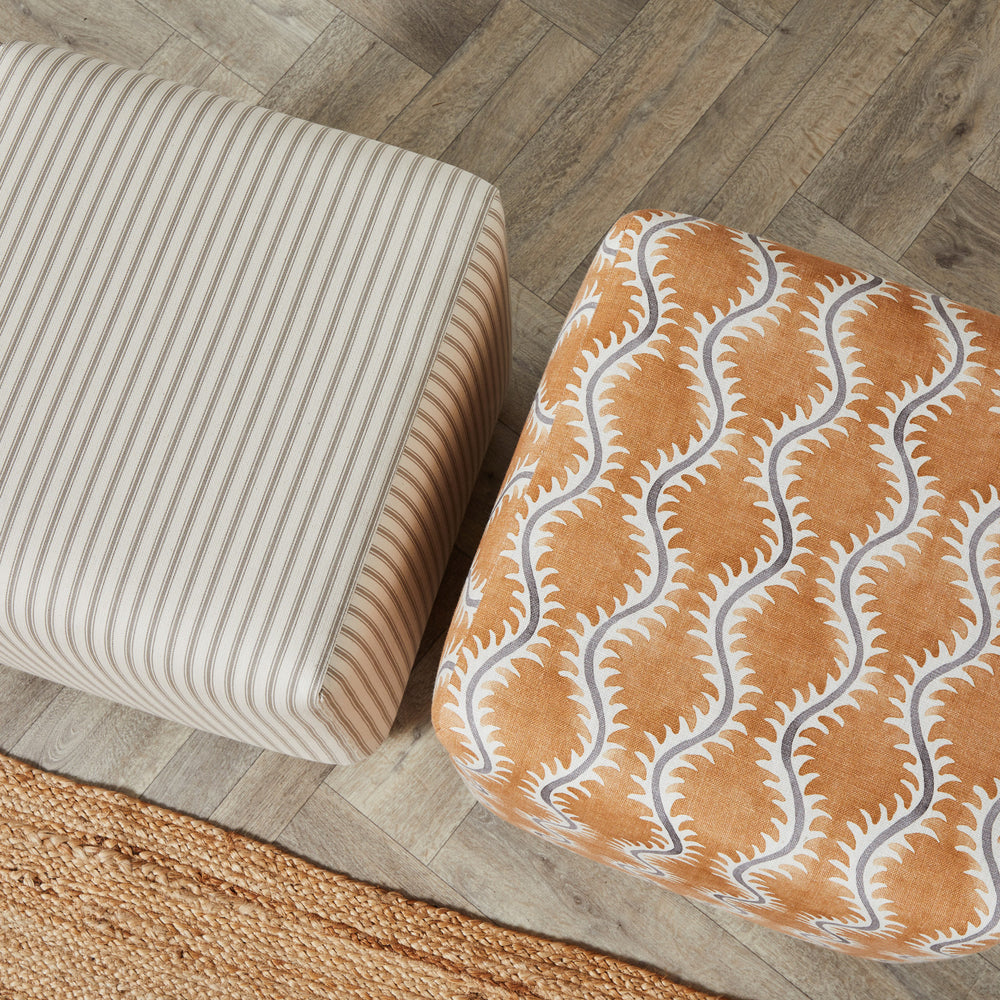

On the surface, pouffes and low footstools seem like the same thing. Both are small and upholstered and will enhance the comforts of whatever room they are placed within. However, at Footstools & More, we understand that height is everything, and even a difference of a few centimetres will make all the difference regarding comfort and functionality.
So, understand the difference between a pouffe and a low footstool and make the best decision for your home and lifestyle.
What constitutes a pouffe?
A pouffe tends to be lower and has a softer, more relaxed design. It’s designed to flex slightly under weight, making it perfect as a piece of occasional furniture. Pouffes are great for areas where furniture has to change position frequently or where there is a requirement for multifunctional furniture.
Sometimes, a pouffe is used as a footrest, a piece of occasional seating, as well as a soft accent that can be hidden away.
Due to their short stature, pouffes are suitable for a laid-back lifestyle because they encourage a lounging attitude and cannot be placed in a definite place within the room.
What is different about a low footstool?
Low footstools are designed with structure in mind. The height of the low footstool is often in line with the seating height of your sofa or armchair. This will provide support to your legs while seated and will give the effect that the item is an extension of the seating arrangement.
The low footstool will remain where you put it. The footstool will help to ground the space. In turn, the space will incorporate the footstool.
Why does height affect comfort and use?
Height is a practical consideration regarding how furniture interacts with the body. Furniture that is not high enough can start to look odd with time, and furniture that is just a bit too high could potentially disrupt the flow of a room. Pouffes promote a relaxed approach to seating, while low footstools are more conducive to sustained periods of sitting.
It is here that proportion is of equal importance to design.
How do material and height work together?
Depending on the height and shape, different materials behave differently. For example, soft fillings and fabrics are ideal for pouffes since they are expected to be compressed slightly. Stiffer designs require firmer upholstery material, especially if the material is leather. An exquisitely crafted brown leather footstool will be best if its height appears thoughtful and in proportion to the surrounding furniture.
Choosing what works for your home
There’s no "right answer." Rooms that always change, or areas created for flexible living, typically require pouffes. Rooms based on comfort, habits, and symmetry generally require footstools.
With every piece that we create at Footstools & More, custom order or not, height becomes an element of discussion from the beginning. In fact, if you’re considering both options, you might want to take a minute to reflect on your own use of that space.
Look at our fabric swatches, compare the ratios, and then let the appropriate height dictate the rest. When things are in balance, the room will simply work.


